
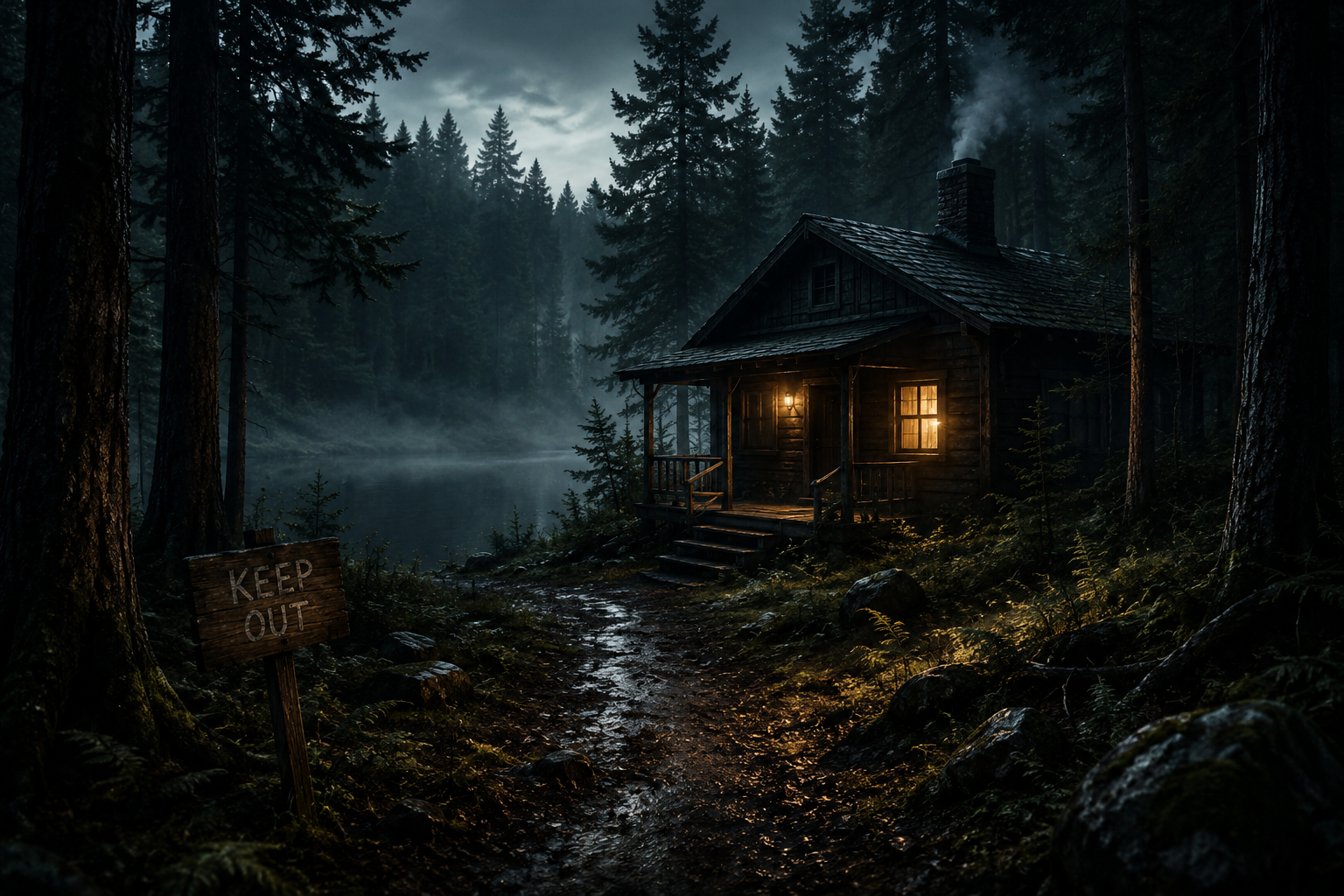
Isolation. Secrets. Silence. Some settings never stop being terrifying.
There’s a reason readers still fall for stories set in lonely cabins deep in the woods.
Even after decades of horror movies, thrillers, and campfire legends, the cabin-in-the-woods trope still works because cabins were never really the scary part.
It’s what they represent.
Isolation Changes Everything
Modern life is loud. Phones buzz constantly. Lights stay on all night. There’s always someone nearby.
A remote cabin strips all of that away.
No distractions.
No witnesses.
No quick escape.
Just a person alone with their thoughts—and sometimes that’s more terrifying than any monster.
In psychological thrillers, isolation becomes pressure. Characters can’t outrun grief, guilt, paranoia, or fear when there’s nowhere left to hide from themselves.
The woods don’t create darkness.
They expose it.
Cabins Are Built for Secrets
Cabins always feel like places where something happened.
Old photographs tucked into drawers. Locked doors. Strange noises in the walls. Stories half-told and quickly abandoned. Even newer cabins can feel unsettling simply because they exist apart from the rest of the world.
That’s what makes them perfect for thrillers.
A cabin can hide:
- buried evidence
- forgotten journals
- family trauma
- missing people
- unreliable memories
The smaller the setting becomes, the bigger the secrets feel.
Why Readers Keep Coming Back
The best thriller settings feel alive. A flickering porch light. Floorboards creaking at midnight. Trees moving outside the window when there’s no wind.
Atmosphere creates dread long before anything terrible happens.
That’s why the cabin trope continues to survive generation after generation. At its core, it taps into something primal:
The fear of being completely alone with something we don’t understand.
Or worse—
something we do.